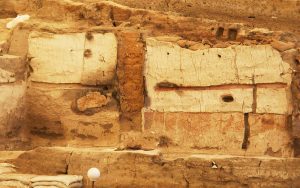
THE LIVING PAST: AŞIKLI HÖYÜK
MİHRİBAN ÖZBAŞARAN – GÜNEŞ DURU – DİDEM TEKSÖZ – SİNAN OMACAN
in memory of UFUK ESİN
INTRODUCTION
One of the enduring outcomes of the transformation that began in the late 1960s with the challenge to traditional archaeological thought has been the questioning of archaeology’s purpose and the audiences it serves. In response to critiques of the positivist methodology and interpretive framework that became dominant during the 1970s, new approaches emerged that brought archaeology into dialogue with disciplines such as ethnology, ethnography, sociology, and experimental archaeology. During the 1980s, the introduction of concepts and approaches including interpretive archaeology, social archaeology, living archaeology, and multivocality further expanded the field. As a result, archaeology has moved beyond the narrow conception of being merely the science of excavation.
The direct or indirect involvement of different segments of society in transforming archaeological data into knowledge has fostered greater interaction and integration, leading archaeological projects to encompass a wide range of activities in addition to excavation. These include the conservation of archaeological sites, the in situ or nearby presentation of excavated remains, the reconstruction of past lifeways, and the transmission of archaeological knowledge to future generations. Such objectives are realized through diverse forms of public engagement, including archaeological parks, open-air museums, and virtual museums.1.